Akhu (Akh, Khu, Ikhu) – This was the immortal part, the radiant and shining being that lived on in the Sahu, the intellect, will and intentions of the deceased that transfigured death and ascended to the heavens to live with the gods or the imperishable stars.
While the Khat lies in the tomb, ready to be animated by the Ka, the Ba might be traveling the underworld with Ra. While the Ab is with the gods, the Khaibit might be with the Ba on the barque, or in the tomb eating some offerings. At the same time, the Akhu, Sekhem and Sahu might be contentedly living in the stars, looking down at the earth.
from wikipedia: https://en.wikipedia.org/wiki/Ancient_Egyptian_conception_of_the_soul
numerous parts of the soul:
Khet or the “physical body”
Sah or the “spiritual body”
Ren or the “name, identity”
Ba or the “personality”
Ka or the “double”
Ib or the “heart”
Shut or the “shadow”
Sekhem or the “power, form”
Collectively, these spirits of a dead person were called the Akh after that person had successfully completed its transition to the afterlife.[2][a] Egyptologist R. David,[3] at the University of Manchester, explains the many facets of the soul as follows:The Egyptians believed that the human personality had many facets—a concept that was probably developed early in the Old Kingdom. In life, the person was a complete entity, but if he had led a virtuous life, he could also have access to a multiplicity of forms that could be used in the next world. In some instances, these forms could be employed to help those whom the deceased wished to support or, alternately, to take revenge on his enemies.[3]
The Akh is a tricky concept perhaps best understood as the effective spirit of the deceased. When a person died, their Ka left their body. The Opening of the Mouth ritual allowed the Ba to leave the body. The akh was the result of the successful union of the Ba and Ka which occurred if the person’s heart passed the test in the Hall of Judgment. Thus the primary purpose of the funerary texts and rituals was to help the deceased become an akh.
Although the akh was not itself divine, it shared some characteristics with the gods and was immortal. During the Old Kingdom, only kings and gods are identified with the akh, but as time progressed all people could hope to be transfigured as one of the blessed dead. Living people could pray to the akh of their ancestors for help, but the akhu could also inflict punishments on the living if not appeased.
The akh also relates to the effectiveness of a person when they undertook any act considered glorious or righteous. For example, a king building a temple for a god or a man feeding and clothing the poor could both be considered akhut (that which is akh).
Temple of Shetaut Neter, sema Institute:
Akhu, Akhu, from Temple of Aset, Dr. Muata Ashby Sebai Maa
Ra Akhu, Dr. Muata Ashby Sebai Maa
DEfinition oif Moving upstream: Something that is moving upstream is moving toward the source of a river against the current, from a point further down the river. Something that is upstream is toward the source of a river.Salmon manage to swim upstream to lay their eggs….the river police, whose headquarters are just upstream of the Ile St. Louis.
PMH pg 134 Sebai Maa The Akhu is represented by the ibis, a symbol of Djehuty…. pg 135, pg 140, pg 143,
pg 157 Chapter 1
Ha em reu nu pert m heru setjesu sakhu pert hait em neter-khert Akhu
Em Amentet nefert djedtu heru
N qeres aq em chet pert
Djed in Asar Any
Asar Sesh Any
Inetedj her-k ka `Amentet
In Djehuty Suten heh
Imi nuk Neter aaa nem depet
Ahay ni her-k nuk ua m neu en nen
Neteru udjaudjau se-malak-heru
Asar er cheftau-f heru
Puy n udajad medutu
Nuk imtu Asar!! Nuk ua M enemu n netery mesu Nut semaaiu cheft nu Asar chnr sebiu her f nu imitu k Heru
pg 181 vs 21; pg 201 vs 7; pg 209, gloss form chapter 10: vs 8-12 pgm 229: Gpddess Nut and the Concept of Heaven pg 238 last paragraph; pg 262, footnotes; pg 278: supplication Appendix 1 plus footnotes pg 328 last paragraph
Tree of Life Sebai Maa pg 44 pg 46 bottom of page pg 143 Dua Ankh Herakhuti pg 237 breakdown…pg 261
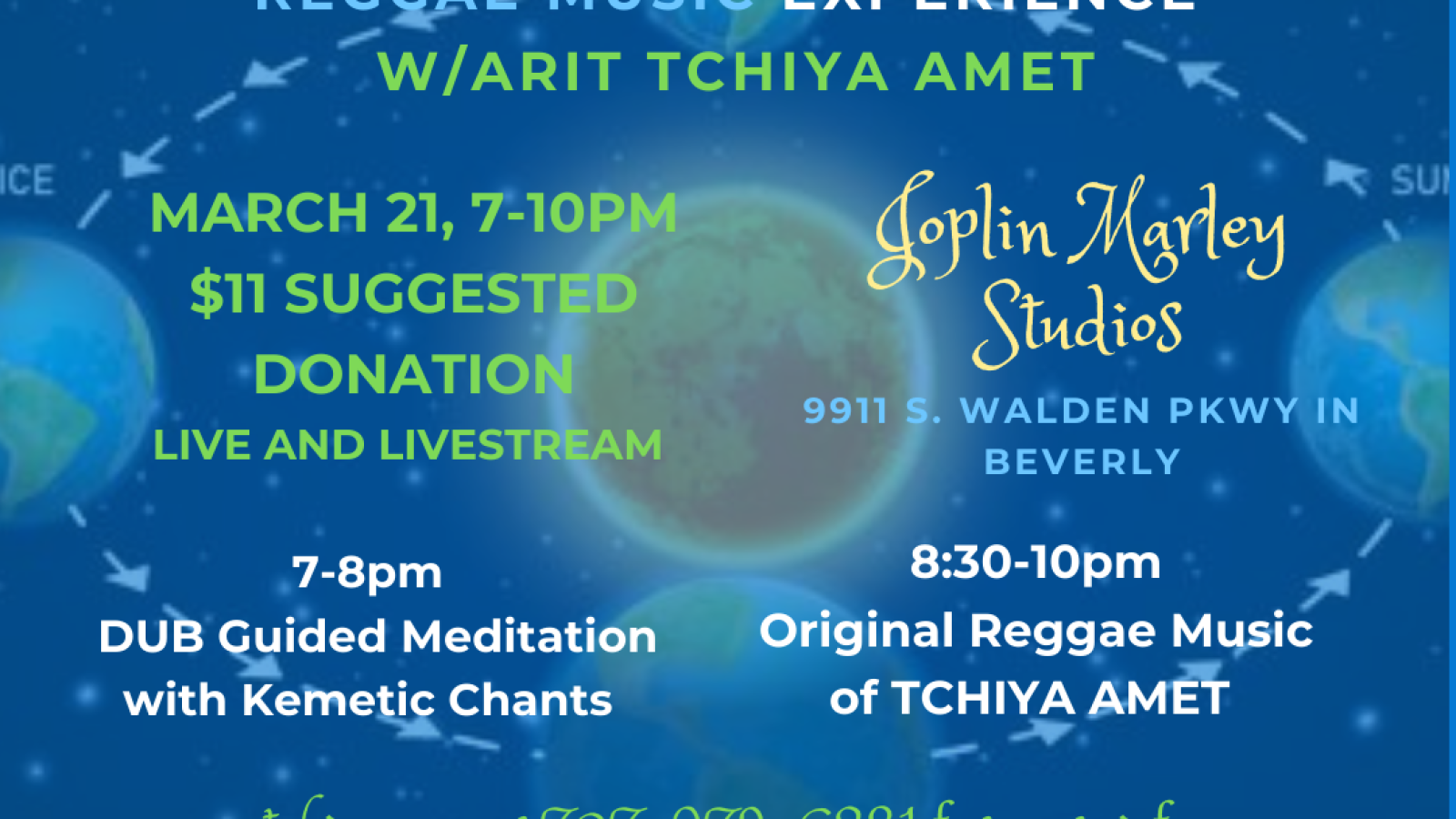
Good Rising and Great Awakenings! Now streaming live on YouTube, tiktok, and various other platforms such as twitter, LinkedIn, telegram, and Melanated People. Soon will be on Pinterest as well. Here is the Schedule for March 2022 plus links and highlights of past transmissions. Currently, the series is following the Neterian Calendar of Holy Days presented by TempleofAmun.com For more information on the Kemetic Wisdom teachings, visit EgyptianYoga.com
And for the Reggae fans, I am sure you must be wondering what caused this Spiritual Direction and Intense Focus of this Music! Well it was my personal musical healing journey. To be honest, there is waaaaaaaaaayyyyyy too much toxic masculinity and colonialism for me to continue as exclusively a Reggae Artist. Too much religious oppression and spiritual enslavement. Too. much Caucasity involved in the Reggae Music Industry. I needed to get more in touch with Divinity, with the Divine Feminine, and not be involved in a movement that required me to remain silent.
So, after decades of exploring other Indigenous Practices and Spiritual technologies, I landed in Ancient Kemet. These are the teachings that allowed me to literally CHANGE NY MIND. To transform myself into My Higher Self.
If you notice, all of my music has been about putting teachings of the Four Directions to Music. I stayed in Kemet for 12 years so far, Moree to come.
During the Ancient African Adorations sessions, we dive deep into the teachings offered for the Holy day, then towards the end, the Song Writing Enchantress appears, and creates new music on the spot, based on the Scriptures or reflections of the Teachings. Sometimes, the teachings and writings of Sebai Maa (Dr. Muata Ashby) & Seba Dja (Dr. Karen “Dja” Ashby) are presented. Sometimes, just the personal reflections of the Chantress and Overseer of AstMaataJi Temple of Divine Light Healing and Sweet Sounds, Arit Neter S Mery Maati, aka Tchiya Amet.
This Music is a reflection of my spiritual journey, and is being shared to enhance your own journey as well.
And, now it is time for …..MORE GREAT ORIGINAL REGGAE MUSIC!!! SPRINQUINOX 2022
Anpu ONKAO Dua Ra Cheft Dua Ra Dua Ra Dua Ra Khepera Dua Khepera, Dua Ra, Dua Ra Tem Adorations to Ra when he rises… pg 28 devotional manual from hymn to Ra #1 pmh The Twelve Hours of the Duat The Regions of Night and Thick Darkness Watercourse of Ra Ur-nes, Ouranos Watercourse of the only God Living one of forms Hidden Abyss of waters Secret cavern Sarcophagus of the gods Procession of images Abyss of waters, lofty of banks Mouth of the cavern Darkness has fallen, and births shine forth
https://www.youtube.com/watch?v=z3VKIy00mhc
https://www.landofpyramids.org/sun-boat.htm
The Sun Boat and the Book of the Dead A hymn to Ra is included in the Papyrus of Ani a Book of the Dead that includes reference to the Matet sun boat and the Sektet sun boat as follows:.
“Hail, thou Disk, thou lord of rays, who risest on the horizon day by day! Shine thou with thy beams of light upon the face of Osiris Ani, who is true of voice; for he singeth hymns of praise unto thee at dawn, and he maketh thee to set at eventide with words of adoration, May the soul of Ani come forth with thee into heaven, may he go forth in the Matet boat, may he come into port in the Sektet boat, and may he cleave his path among the never-resting stars in the heavens.
The Hours: At the entrance of every country of the Duat is a gate; tall are the walls, and narrow is the passage. None may pass by him save those only to whom his name is known. In the evening Ra descends in majesty to the Western horizon of heaven, to the portals of the Duat at the Gap of Abydos. Splendid is the Mesektet Boat, glorious its trappings, and its colours are of amethyst and emerald, jasper and turquoise, lazuli and the lustre of gold. At the Gap of Abydos waits a company of gods to prepare the Boat for the journey through the Duat, the land of night and of thick darkness. Stripped is the Boat of its splendour, bare and without glory is it when it passes through the portals of the Duat, and in it is the body of Ra, lifeless and dead.
“Watercourse of Ra” In the cabin of the Boat is Ra, dead and lifeless
Ur-nes, Ouranos. In this country Ra is Lord and King, and those who live here are in peace, for none can pass the great hooded snakes who guard the gates, whose breath is mingled flame and venom. Happy are those who inhabit this land, for here dwell the spirits of the corn, Besa and Nepra and Tepu-yn. These are they who make the wheat and barley to flourish and cause the fruits of the earth to increase.
Watercourse of the only God: Scale of Maat “the souls of men are not able to participate of the divine nature whilst they are encompassed about with bodies and passions…When they are freed from these impediments and remove into those purer and unseen regions…’tis then that this God becomes their Leader and King; upon him they wholly depend, still beholding without satiety, and still ardently longing after that beauty, which ’tis not possible for man to express or think.”
“Living one of forms” Sokar has dominion in this land. Dreary is the waste of sand, limitless the desert, gloomy and sombre the landscape. Men call this place Re-stau, the Mouth of the Tomb. Even in this gloomy desert Osiris has dominion; Lord of Re-stau is he called, therefore And now the Boat of Ra can no longer float upon the water, but is changed into a great and mighty serpent with glittering scales. At the prow is a serpent’s head with eyes watchful and fierce, at the stern is a serpent’s head with poison-fangs prepared. Over the sand it glides
“Hidden” is the name of the fifth country of the Duat, and in this dark and gloomy region dwells Sokar, its Lord and King, god of those who are buried…
Savage and fierce as a hawk is Sokar, and terrible is the punishment he metes out to those who rebel against him. Hard by his dwelling is a lake where the water boils and bubbles with heat as water boils in a pot. Into the boiling lake are cast the rebels, and they cry to Ra for help, but Ra lies cold and lifeless, waiting for the coming of Khepera, and their cries are unheeded while the Boat passes on its way.
Slowly goes the Boat of Ra, passing through the Duat, through regions of thick darkness, of terror and dismay, to the place where the abominable Apep lies in wait for the coming of Ra.
“Abyss of waters” is the name of the sixth country of the Duat, The river rises out of the sand again, and the Boat floats upon its waters, and those who are in it rejoice, for the hours of the night are passing away.
Here also lives the great coiled serpent with five heads, and within his coils lies Khepera, god of resurrection. On his head he places the scarab, beneath his feet is the sign of flesh; thus does he send Life into the dead, and thus will he re-vivify Ra. For this is the farthest point of the Duat, and beyond the gate lies the way to the sunrise.
“Secret cavern” is the name of the seventh country of the Duat.
Full of danger and peril is it, for the abominable Apep dwells in this land. As a great and monstrous serpent does he appear and with wide-open mouth he swallows the waters of the river, that the Boat may be wrecked and that Ra may perish. Then would the earth belong to the powers of darkness, and evil and wickedness would overcome the gods.
But in the prow of the Boat stands Isis, the great enchantress, whose magic none can withstand; Isis, the greatest of the goddesses, she who can raise the dead, and to whom all mankind pay love and reverence. With arms outstretched, she recites the Words of Power; calling aloud across the dark river. On a sandbank in the midst of the river lies the abominable Apep. hen Selk and Her-desuf leap from the Boat of Ra and bind him with cords, and with sharp knives they pierce his flesh, hoping to destroy him. But Apep is immortal, and every night will he await and attack the Boat of Ra. Yet Selk and Her-desuf hold him fast while the Boat continues on its way, past the great sandbanks, where he writhes and twists and struggles to get free, but the cords are strong and the knives are sharp and his efforts are in vain.
“Sarcophagus of the gods” is the name of the eighth country of the Duat, for here dwell the dead gods. Dead and buried are they, embalmed and bandaged as men embalm and bandage the dead upon earth.
Softly goes the Boat of Ra, passing through the Duat, moving through the darkness to the sunrise and the day. “Procession of images” is the name of the ninth country of the Duat.
From them the dwellers in this land receive the offerings which are made to them upon the earth. Then the star-gods break into singing; and the twelve goddesses and the weaving gods and the dwellers in this land chant the glory and honour of Ra, praising the Lord of the Boat, the Maker of earth and of heaven. With joy and singing they follow the appointed path.
“Abyss of waters, lofty of banks” is the name of the tenth country of the Duat, and the ruler is Ra. By the side of the river are four goddesses; upon the darkness they cast beams of light, making bright the way of Ra upon the gloomy river. Before the Boat of Ra moves the Star of Morning…The greatest of all the countries of the Duat is this, for in this realm of wonder and mystery Khepera joins himself to Ra, and Ra himself is created anew. Yet the dead body of Ra remains in the Boat; but his soul is united to the soul of Khepera.
“Mouth of the cavern” is the name of the eleventh country of the Duat, and Ra is its ruler.
“Darkness has fallen, and births shine forth” is the name of the twelfth country of the Duat. On the prow of the Boat is the great scarab of Khepera, ready to make the transformations of Ra ere he reaches the end of the Duat.
TOL pg 22 pg 157 pg 183 Aset pg 219-220 outcomes of journey pg 223 pg 245 pg 246 Hymn to Ra pg 248: Principles of then Hymn to Ra
African religion Vol4: Asian Resurrection pg 68 A Hymn to ra vs 1, vs 2 pg 73; Maat pedestal pg 100 vs 45-46 Aset stops the Boat
pg 126 vs 142-143: Ra is tired of the battle between Heru and Set and takes a nap. Who is on the Boat?
pg 113 Sailing in a Boat (?) pg 143 who is on the boat pg 201 movement of boat starts creation
PMH pg 73 Boat of Ra pg 76 pg 119 mysticism of the boat ride
Chapter 1 pg 157
pmh Vol 5: Temple of Amun Ra pg 221 Divine Boat
African Religion vol. 2 Theban Theology pg 219 Yhe Voyage of Ra and the Journey of the Soul
Maat Teaching #4: Course of Ra centered and non-dual established by Maat chap 15. Vol 2 PMH Dr. Ashby pg 108
Aaaa Asar Any Sheps maa-kheru im hetep maa-kheru djesef Anetej her k uben k im akhet k im Ra hetep her Maat